
Alright, let’s talk durian. Specifically, the Red Prawn variety. You might have seen it around, maybe heard whispers about its unique taste. It’s a bit of a legend, but also, confusingly, a bit of a mystery. There’s the real deal, the Penang Red Prawn (D175), and then there’s what some folks call the ‘Singapore Red Prawn’ (D13), which is actually a different type altogether. We’re going to clear all that up, talk about when you can actually get your hands on it – the all-important red prawn durian season – and what makes it so special. Plus, where to find the good stuff and how to know if it’s actually ripe. Let’s get cracking.
Key Takeaways
- The true Penang Red Prawn is known as D175, while D13 is often mistakenly sold under the same name.
- The main red prawn durian season runs from June to August, with a smaller season from December to January.
- D175 offers a sweet, custardy texture with hints of rose and vanilla, while D13 is typically sweeter with a firmer, more orange flesh.
- Look for a strong aroma, slightly flexible spikes, and a hollow sound when tapping the husk to identify a ripe Red Prawn.
- Trusted stalls in Singapore, online retailers, and Malaysian markets are the best places to hunt for authentic Red Prawn durian.
Understanding Red Prawn Durian
Distinguishing Penang Red Prawn (D175)
The Red Prawn durian, often identified by its cultivar number D175, is a variety that holds a special place for many durian lovers. It’s originally from Penang, Malaysia, though it’s now also grown in other regions like Johor. When people talk about the ‘authentic’ Red Prawn, they’re usually referring to this D175. It’s known for its distinctive flavour and texture, which sets it apart from other types.
The ‘Singapore Red Prawn’ Misnomer (D13)
It’s quite common to see a durian variety labelled as ‘Singapore Red Prawn’ in markets, especially in Singapore. However, this is often a different cultivar, typically D13. While D13 also has orange flesh and a sweet taste, it’s generally considered less complex and distinct than the true Penang Red Prawn (D175). This naming confusion can lead to disappointment if you’re expecting the specific characteristics of D175. It’s worth noting that some online retailers might also list D13 under the ‘Red Prawn’ name, so always check the cultivar number if possible. This variety is generally milder and easier to enjoy for those new to durian. D13 is underrated.
Visual Characteristics of D175
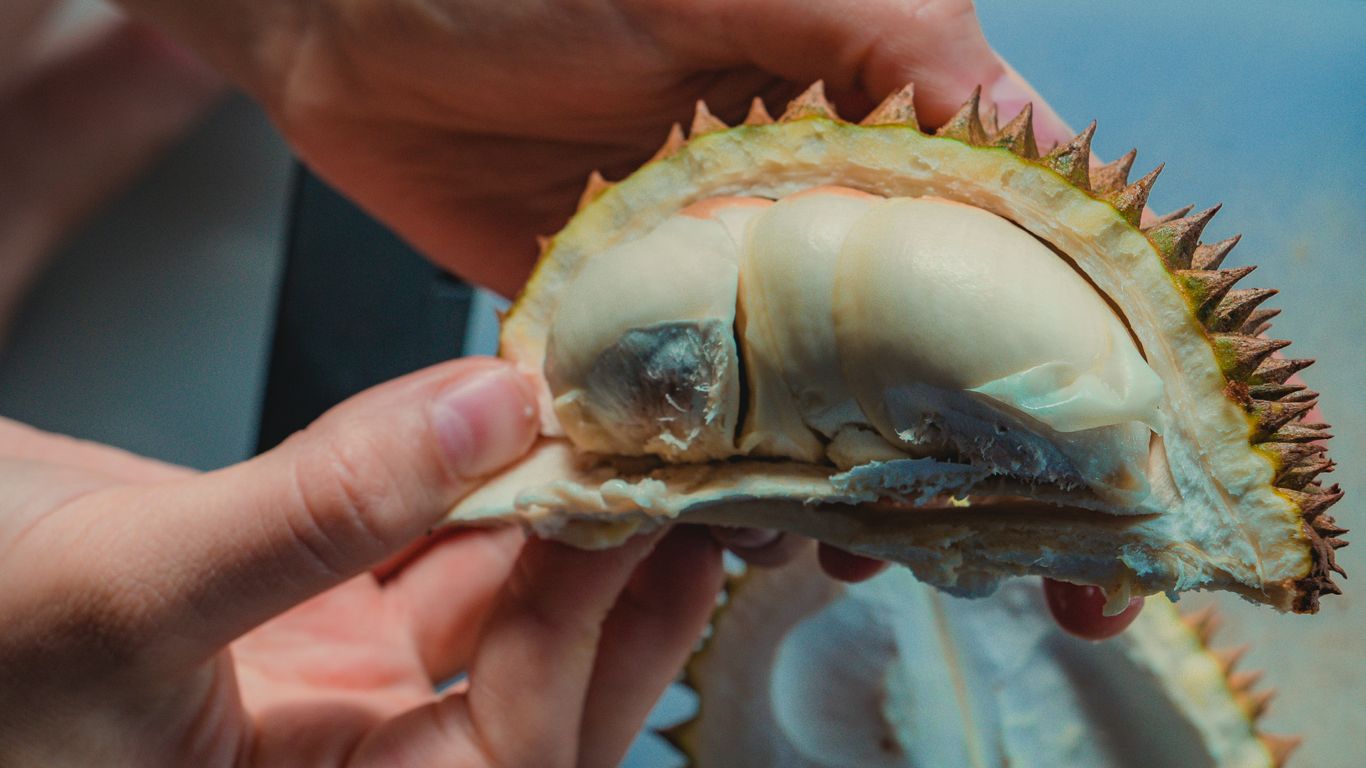
Visually, the D175 Red Prawn durian has some tell-tale signs. The husk colour can vary, but it often has a more brownish or greyish-brown hue compared to the brighter green of some other durians. The spikes are typically smaller and sharper. When opened, the flesh is a striking orangey-red colour, which is where it gets its name. The texture is famously soft and sticky, almost custardy.
Here’s a quick comparison of visual cues:
| Feature | D175 (Penang Red Prawn) | D13 (‘Singapore Red Prawn’) |
|---|---|---|
| Husk Colour | Brownish/Greyish-brown | Green |
| Spikes | Smaller, sharper | Blockier, flatter sides |
| Flesh Colour | Orangey-red | Deep orange |
| Texture | Soft, sticky, custardy | Smooth, slightly firm |
The red prawn durian taste description often includes notes of sweetness with a subtle, almost rosy or fruity undertone. Its texture is a key feature, being exceptionally sticky and creamy, which makes it feel quite decadent.
This variety is a real treat, especially when in season. The combination of its unique colour, texture, and flavour makes it a memorable durian experience. If you’re looking for a durian that’s both sweet and has a bit of a floral note, the D175 is definitely one to seek out. Durian season is here and Red Prawn is a popular choice.
The Red Prawn Durian Season
Figuring out exactly when to get your hands on the best Red Prawn durian can feel a bit like a treasure hunt. While durian has a general season, specific varieties like the Red Prawn (D175) have their own peak times, and these can shift slightly year to year based on weather patterns.
Peak Durian Months
The main durian season in Malaysia and Singapore typically kicks off around June and runs through to August. This is when orchards are producing the most fruit, leading to the widest availability and often the most competitive prices. If you’re looking for the absolute freshest Red Prawn, aiming for the earlier part of this window is usually a good bet. The durian season in Singapore generally follows the Malaysian harvest closely.
Secondary Durian Season
Beyond the main summer months, there’s often a smaller, secondary season that can occur around December to January. While the harvest might not be as abundant, it’s still possible to find good quality Red Prawn durian during this time. This period can be great for those who missed out earlier or are craving their durian fix outside the typical peak.
Optimal Buying Times
To truly snag the best Red Prawn durian, timing within the season matters. While the season might start as early as April in some Malaysian regions like Johor, the real abundance for Red Prawn often hits its stride a bit later. Aiming for the second or third week of the peak season (June-August) can be ideal, as prices might stabilise after the initial rush, and the fruit quality is generally excellent. Keep an eye out for early harvests starting in April, as mentioned for some Malaysian orchards, but be prepared for potentially higher prices then.
Durian availability is heavily influenced by weather. A dry spell followed by rain can trigger fruiting, but extreme weather can also damage crops, affecting the overall yield and quality for the season.
Here’s a general guide:
- April – May: Early season, potential for Red Prawn but availability might be limited and prices higher.
- June – August: Peak season. Best availability, variety, and often better prices. This is the prime time for Red Prawn.
- September – November: Season winding down, availability decreases.
- December – January: Secondary season, smaller harvest but still possible to find good fruit.
Flavour Profiles and Texture
Sweet and Rosy Notes
The Red Prawn durian, particularly the authentic Penang variety (D175), is celebrated for its distinctively sweet flavour. Many describe it as having a rosy or floral undertone, which sets it apart from other durians. This sweetness isn’t overpowering; instead, it’s often balanced and pleasant, making it a favourite for those who prefer a less intense durian experience. Some even detect subtle hints of vanilla, adding another layer to its complex taste profile.
Custardy and Sticky Texture
When it comes to texture, Red Prawn durian is known for being exceptionally soft and sticky. The flesh is often described as custardy, melting in your mouth with a delightful clinginess. Unlike some drier durians, the flesh of the D175 has a moist quality that contributes to its rich mouthfeel. It’s a texture that feels decadent and satisfying, almost like a dessert in itself. This sticky, creamy consistency is a hallmark of a good Red Prawn.
Subtle Vanilla and Fruity Undertones
Beyond the primary sweetness and rosy notes, the Red Prawn durian offers more nuanced flavours. You might notice a gentle vanilla essence woven through the taste, providing a smooth finish. There are also subtle fruity undertones that add brightness without being sharp. These delicate notes combine to create a well-rounded flavour that is both comforting and intriguing. It’s this layered complexity that makes the Red Prawn a unique and sought-after variety, especially for those exploring the diverse world of durian flavours. If you’re new to durian, this variety is often recommended as a gentle introduction to the fruit’s complex tastes, and you can often find it during Singapore’s peak durian months.
The D13 variety, often marketed as ‘Red Prawn’ in Singapore, presents a different flavour and texture profile. While it shares a deep orange flesh colour and a sweet taste, it tends to be softer and smoother, sometimes lacking the distinct rosy notes of the D175. It’s a good option if you prefer a milder, more accessible durian, but true aficionados will notice the difference.
Here’s a quick comparison of flavour and texture:
| Feature | Red Prawn (D175) | ‘Singapore Red Prawn’ (D13) |
|---|---|---|
| Primary Taste | Sweet with rosy/floral notes | Mildly sweet |
| Texture | Custardy, sticky, soft | Soft, smooth |
| Undertones | Subtle vanilla, fruity | Less pronounced |
| Colour | Pale yellow to orangey-red | Deep orange |
When selecting your durian, remember that aroma is key. A ripe Red Prawn will have a strong, sweet scent. You can also gently shake the fruit; a ripe one will have a slight rattle, indicating the flesh has pulled away from the husk. For those looking for a truly authentic experience, seeking out stalls that clearly distinguish between D175 and D13 is advisable, as you can find great options during Singapore’s durian season.
Comparing Red Prawn Varieties
When you’re on the hunt for Red Prawn durian, you’ll quickly notice there’s a bit of confusion out there. It’s not always straightforward, and sometimes what’s labelled ‘Red Prawn’ isn’t quite what you might expect. The main players in this mix-up are usually the D175 and the D13 varieties.
D175: The Authentic Penang Red Prawn
The true Red Prawn, officially known as D175, hails from Penang. This is the variety that many durian enthusiasts rave about. It’s known for its distinct sweet and slightly rosy flavour, often with a rich, custardy texture that’s wonderfully sticky. The flesh typically sports a beautiful orangey-red hue, making it quite appealing. If you’re looking for the classic Red Prawn experience, D175 is your go-to. It’s often described as a dessert in a husk, perfect for those who enjoy a sweeter profile. You can find this authentic Penang Red Prawn at reputable stalls.
D13: Often Marketed as Red Prawn
Then there’s the D13. This variety is frequently sold under the ‘Red Prawn’ name, especially in Singapore, leading to the ‘Singapore Red Prawn’ misnomer. While D13 also has orangey flesh and a sweet taste, it’s generally milder than D175. Its texture can be smoother and slightly firmer, lacking some of the intense stickiness that defines the D175. Some people actually prefer the D13 for its less overpowering sweetness and its easier-to-handle texture, especially if they’re new to durian. It’s a good option if you want a pleasant flavour without the full-on intensity of some other varieties.
Texture Differences Between Varieties
The most noticeable difference between D175 and D13 often comes down to texture. D175 is typically softer, almost melting in your mouth, with that signature sticky, creamy consistency. It can feel a bit like poking a water balloon, as the flesh is so yielding. D13, on the other hand, tends to be a bit more structured. It’s smooth and soft, yes, but it doesn’t usually have the same level of gooeyness. It leaves a clean indentation when poked, rather than collapsing.
Here’s a quick rundown:
- D175 (Penang Red Prawn): Softer, stickier, custardy, rich flavour, orangey-red flesh.
- D13 (Often called ‘Singapore Red Prawn’): Smoother, slightly firmer, sweet and mild flavour, deep orange flesh.
It’s worth noting that even within the D175 variety, there can be variations depending on where it’s grown. Durians from Johor, for instance, might have a slightly different colour and texture compared to those from Penang, though they generally retain the core Red Prawn characteristics. Always ask your vendor if you’re unsure about the specific variety you’re purchasing.
Ultimately, both D175 and D13 offer enjoyable durian experiences, but understanding the differences helps you choose the one that best suits your taste preferences. If you’re after the classic, rich, and sticky Red Prawn, aim for D175. If you prefer something a bit milder and smoother, D13 is a solid choice that’s often more affordable and widely available. Many online retailers, like Durian Delivery, will clearly label their D13 as such, even if they also offer it under the ‘Red Prawn’ moniker.
Where to Find Red Prawn Durian
So, you’ve decided you want to track down some authentic Red Prawn durian. Good choice! Finding the real deal, especially the D175 variety, can sometimes feel like a treasure hunt. While you might see ‘Red Prawn’ advertised quite a bit, it’s worth knowing where to look to get the genuine article.
Trusted Durian Stalls in Singapore
Singapore is a fantastic place to hunt for durian, and many stalls pride themselves on offering quality fruit. Some vendors have been around for ages and have built a solid reputation. Combat Durian on Balestier Road, for instance, is known for its honest dealings and has been operating for decades. It’s a place where you can often get good advice about the different varieties. It’s always a good idea to ask the seller if they have the D175 Penang Red Prawn specifically.
Here are a few things to keep in mind when visiting stalls:
- Ask about the origin: Is it from Penang, or grown elsewhere like Johor? This can affect the flavour and texture.
- Look for clarity: Does the stall clearly label their durians? Reputable places usually do.
- Observe the crowd: Busy stalls often mean popular stalls with good fruit.
Online Durian Retailers
For convenience, plenty of online retailers now deliver fresh durian right to your doorstep. This is a great option if you’re short on time or live further away from known durian hotspots. Many of these services specialise in sourcing high-quality durians from Malaysia. When ordering online, check reviews and look for services that clearly state the durian variety they are selling. Some services even offer same-day delivery, which is perfect for those sudden cravings. You can find services that deliver various durian varieties in Australia as well, though availability might differ.
Malaysian Orchards and Markets
If you’re feeling adventurous and happen to be in Malaysia, heading directly to the source is an option. Many orchards and local markets, especially in areas like Penang or Johor, will have the freshest Red Prawn durian during the season. This often means you’re getting the fruit at its peak. It’s a more immersive experience, allowing you to see where the fruit comes from and potentially even sample different types directly from the growers. This is where you’ll find the widest selection of authentic Penang Red Prawn durians.
Identifying a Ripe Red Prawn
Picking a good Red Prawn durian is a bit of an art, but once you know what to look for, you’ll be a pro. It’s not just about the price tag; it’s about getting that perfect balance of sweetness and texture.
The Importance of Aroma
The smell is your first clue. A ripe Red Prawn will have a strong, distinct aroma. If it smells like nothing, it’s probably not ready yet. On the flip side, if it smells overly fermented or like it’s gone off, it’s best to steer clear. You’re looking for that classic durian scent, not something that makes you want to run away.
Shake and Tap Tests
Give the durian a gentle shake. If you can hear the seeds rattling around inside, that’s a good sign the flesh is soft and ready to eat. Then, try tapping the husk with your knuckles. A ripe durian should sound hollow, like you’re knocking on a drum. A dull thud might mean the flesh inside isn’t quite there yet.
Spike Flexibility and Husk Condition
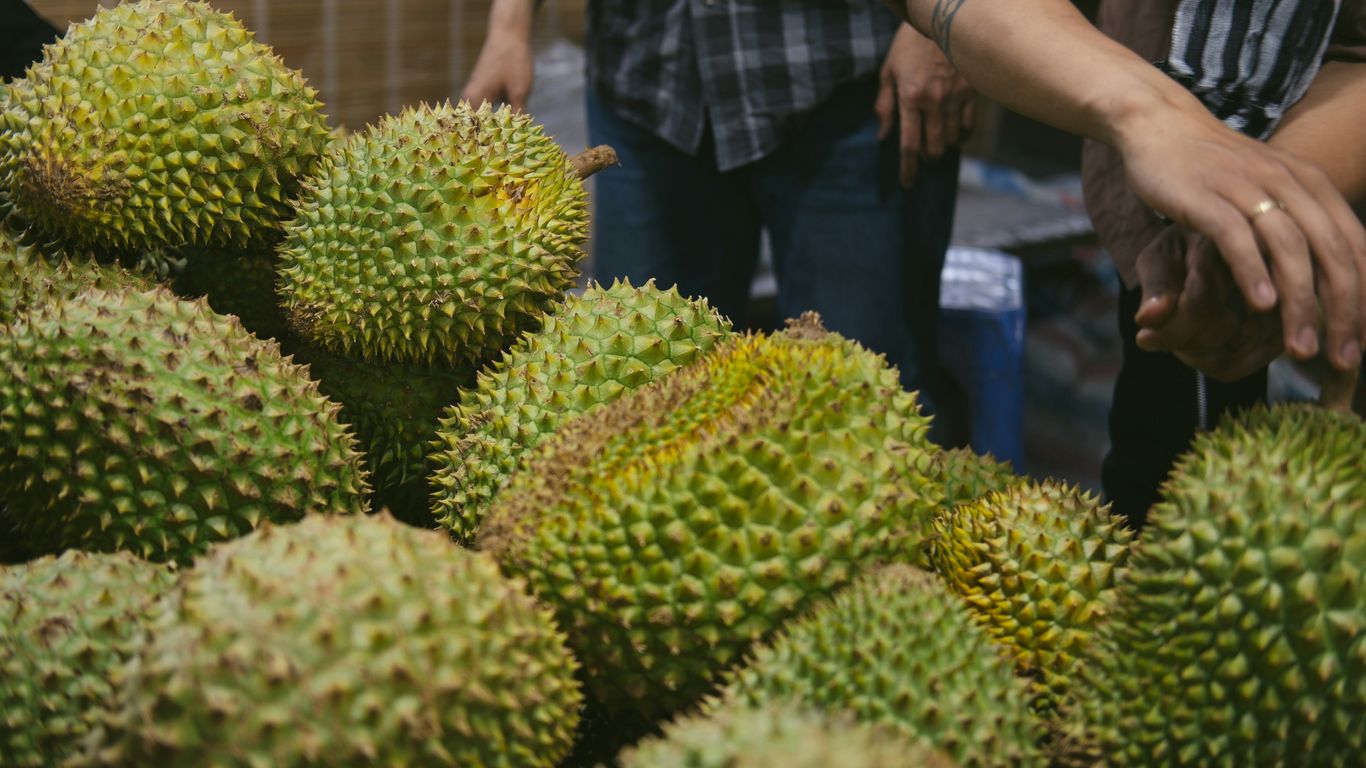
Pay attention to the spikes. When you press a few together, they should have a bit of give – slightly flexible but still firm. If they’re rock hard, the fruit is likely unripe. If they feel too soft or mushy, it might be past its prime. The husk itself should look healthy, generally greenish or a bit brown, without any major cracks. Cracks can mean it’s either been opened already or is overripe.
Choosing the right durian isn’t just about luck; it’s about knowing the subtle signs that indicate ripeness and flavour. Apart from the common tips like smelling and shaking, I’ve found that paying attention to the feel of the spikes can really help. The spikes should be slightly flexible but firm—not hard or overly soft.
Here’s a quick rundown of what to check:
- Smell: Strong and distinct, not absent or overly fermented.
- Shake: Listen for rattling seeds, indicating soft flesh.
- Tap: A hollow sound suggests ripeness.
- Spikes: Slightly flexible, not rock hard or mushy.
- Husk: Healthy colour (greenish/brownish) with no significant cracks.
Remember, different varieties have slightly different cues, but these general checks will serve you well when hunting for that perfect Penang Red Prawn durian.
Storage and Enjoyment Tips
So you’ve managed to snag yourself some Red Prawn durian – nice one! Now, the big question is, how do you keep it tasting its best and actually enjoy it without it going off too quickly? It’s not rocket science, but there are a few things to keep in mind.
Keeping Durian Fresh
First off, if you’re not planning on eating it straight away, you’ll want to get it into the fridge. Pop the durian pulp into an airtight container or wrap it up well. This helps to slow down the ripening process and keeps that distinctive aroma from taking over your entire fridge. For short-term storage, like a day or two, this is usually enough. If you’re thinking longer, freezing is an option, but honestly, durian is best enjoyed fresh.
Best Consumption Window
Durian, especially a delicate variety like Red Prawn, is at its peak flavour for a pretty short window. Generally, you’re looking at consuming it within 1-2 days of purchasing it. After that, it starts to lose its charm, and the texture can get a bit mushy. It’s a bit like a perfectly ripe avocado – you’ve got to catch it at the right moment.
Sharing for Variety
Durian is definitely a communal fruit, isn’t it? It’s way more fun to share a few pods with mates or family. Plus, if you’ve got a few different types, you can do a bit of a taste test. Comparing the sweet, sticky notes of the Red Prawn (D175) with, say, the creamier Musang King, really highlights what makes each variety special. It’s a great way to appreciate the nuances of this king of fruits. If you’re keen to explore different types, checking out online retailers can give you a good range, especially during peak season Durian Delivery Singapore.
The key is to treat durian with a bit of respect. It’s a seasonal fruit that doesn’t hang around forever. Get it, enjoy it relatively soon, and savour those unique flavours before they fade. Don’t overthink it; just eat it!
Beyond Red Prawn: Other Popular Varieties
While the Red Prawn (D175) has its dedicated fans, the world of durian offers a spectrum of tastes and textures that cater to every palate. Exploring other popular varieties can be a rewarding experience, revealing the fruit’s incredible diversity. It’s worth noting that availability can shift based on the season, so keeping an eye on durian availability in Singapore is always a good idea.
Musang King’s Creamy Appeal
Often hailed as the king of durians, Musang King (or Mao Shan Wang) is renowned for its exceptionally creamy, almost custard-like flesh. Its flavour profile is a complex balance of sweetness with a distinct, pleasant bitterness that many find addictive. The texture is thick and rich, coating the mouth with its intense flavour. It’s a variety that commands a higher price, reflecting its popularity and sought-after characteristics.
D24’s Balanced Taste
D24, another well-loved variety, offers a more approachable flavour compared to some of the more intensely bitter options. It typically presents a good balance between sweet and slightly bitter notes, with a texture that is generally soft and yielding. Some describe its taste as having a subtle alcoholic or fermented undertone, which adds to its unique appeal. It’s a solid choice for those who enjoy durian but might find Musang King a bit too strong.
XO Durian’s Intense Bitterness
For the true durian aficionado, XO durian presents a challenge and a reward. Its name hints at its complex, fermented notes, often reminiscent of brandy or cognac. The flavour is intensely bitter, with a lingering aftertaste that some find incredibly moreish. The texture can vary, but it’s often described as slightly drier or more fibrous than other varieties. This is definitely not for the faint-hearted, but for those who appreciate its unique profile, it’s unparalleled.
When exploring different durian types, remember that the experience can be quite personal. What one person finds intensely bitter, another might find perfectly balanced. Factors like ripeness, origin, and even the specific tree can influence the final taste and texture. Don’t be afraid to try a small portion of a new variety before committing to a whole fruit.
Here’s a quick comparison of some popular types:
| Variety | Primary Flavour Profile | Texture |
|---|---|---|
| Musang King | Sweet with bitterness | Creamy, rich |
| D24 | Balanced sweet/bitter | Soft, yielding |
| XO Durian | Intense bitterness | Variable, can be fibrous |
| Red Prawn | Sweet, slightly fruity | Sticky, custardy |
While the Red Prawn is a star, there are heaps of other tasty prawn varieties out there! Each has its own unique flavour and texture, making them perfect for different dishes. Want to discover more amazing seafood options? Check out our full menu online!
Wrapping Up the Red Prawn Hunt
So, after all that searching and tasting, it’s clear that the Red Prawn durian is a bit of a chameleon. Whether you’re getting the D13, often labelled as Singapore Red Prawn, or the D175, which is the true Penang Red Prawn (even when grown in Johor), you’re in for a treat. The D13 tends to be sweeter with a smoother texture, while the D175 offers a richer, more complex flavour with that classic Red Prawn hint of red wine. Both have their fans, and honestly, trying both is the best way to figure out your favourite. Keep an eye out during the main durian seasons from June to August, and the smaller season in December to January, and don’t be afraid to ask sellers about the specific variety. Happy hunting!
Frequently Asked Questions
What’s the difference between Penang Red Prawn (D175) and the ‘Singapore Red Prawn’ (D13)?
Good question! The real Penang Red Prawn, known as D175, has a softer, stickier texture and a more complex, slightly wine-like flavour. The D13, often called ‘Singapore Red Prawn’, has a firmer, smoother texture and a simpler, sweeter, more floral taste. Think of D175 as the fancy original and D13 as a popular, easier-to-like cousin.
When is the best time to find Red Prawn durian?
Durian season in Singapore, which mostly gets its fruit from Malaysia, usually has a main season from June to August and a smaller one from December to January. For the best pickings and maybe slightly better prices, aim for the second or third week of the main season. That’s when the fruit should be at its prime.
What does Red Prawn durian taste like?
Red Prawn durian is known for its lovely sweet taste, often with hints of rose or other floral notes. It’s not usually super bitter. The texture is a big part of its charm – it’s often described as custardy, sticky, and smooth, almost like a rich pudding.
How can I tell if a Red Prawn durian is ripe?
Give it a sniff! A ripe durian will have a strong, sweet smell. Gently shake it – you might hear the seeds rattling inside, meaning the flesh is loose. Also, check the spikes; they should be a bit flexible, not rock hard. A slight, natural crack in the husk can also be a good sign.
Where are the best places to buy Red Prawn durian in Singapore?
You can find good Red Prawn durian at trusted fruit stalls, especially ones with a long-standing reputation like Combat Durian in Balestier. Many online durian delivery services also offer it, often with options for same-day delivery. Just make sure you’re buying from a reliable seller.
Is it true that some durians are sold under the wrong name?
Yeah, it happens! As we’ve seen, D13 is sometimes marketed as ‘Red Prawn’ even though it’s different from the D175 Penang Red Prawn. It’s always a good idea to ask the seller about the specific variety (like D175 or D13) if you have a particular taste or texture in mind.
How should I store Red Prawn durian after buying it?
To keep your durian fresh and tasty for a day or two, store it in the fridge. Wrap it loosely so the aroma can still escape a bit, but it doesn’t get too mushy or spoil. It’s best eaten fresh, though!
Besides Red Prawn, what other durian types are popular?
There are heaps of other popular ones! Musang King (Mao Shan Wang) is super famous for its creamy, bittersweet taste. D24 is another classic, known for a more balanced sweet and slightly bitter flavour. And if you like it really bitter, XO durian is a strong contender.