
Alright, let’s talk durian. If you’re in Singapore, you know this is serious business. There are so many different types, and honestly, it can get a bit confusing trying to figure out which one’s actually worth your hard-earned cash. We’re going to break down some of the most popular durian types Singapore has to offer, from the super famous ones to some slightly lesser-known gems. Get ready to find your next favourite spiky fruit!
Key Takeaways
- Mao Shan Wang, also known as Musang King, is currently the top dog in Singapore’s durian scene, loved for its bittersweet flavour and creamy texture.
- Red Prawn durians are a hit with those who prefer a sweeter, milky taste and often have a good flesh-to-seed ratio.
- The D24 Sultan, once the reigning champion, still holds its own with a distinct flavour and a lingering hint of alcohol.
- Golden Phoenix (Jin Feng) offers a strong, acidic profile and is known for its generous amount of flesh despite its smaller size.
- Black Gold is considered a premium grade of Mao Shan Wang, often identified by dark greyish seams and a more intense, bitter flavour.
The Reigning King: Mao Shan Wang
Pahang Signature Black Gold
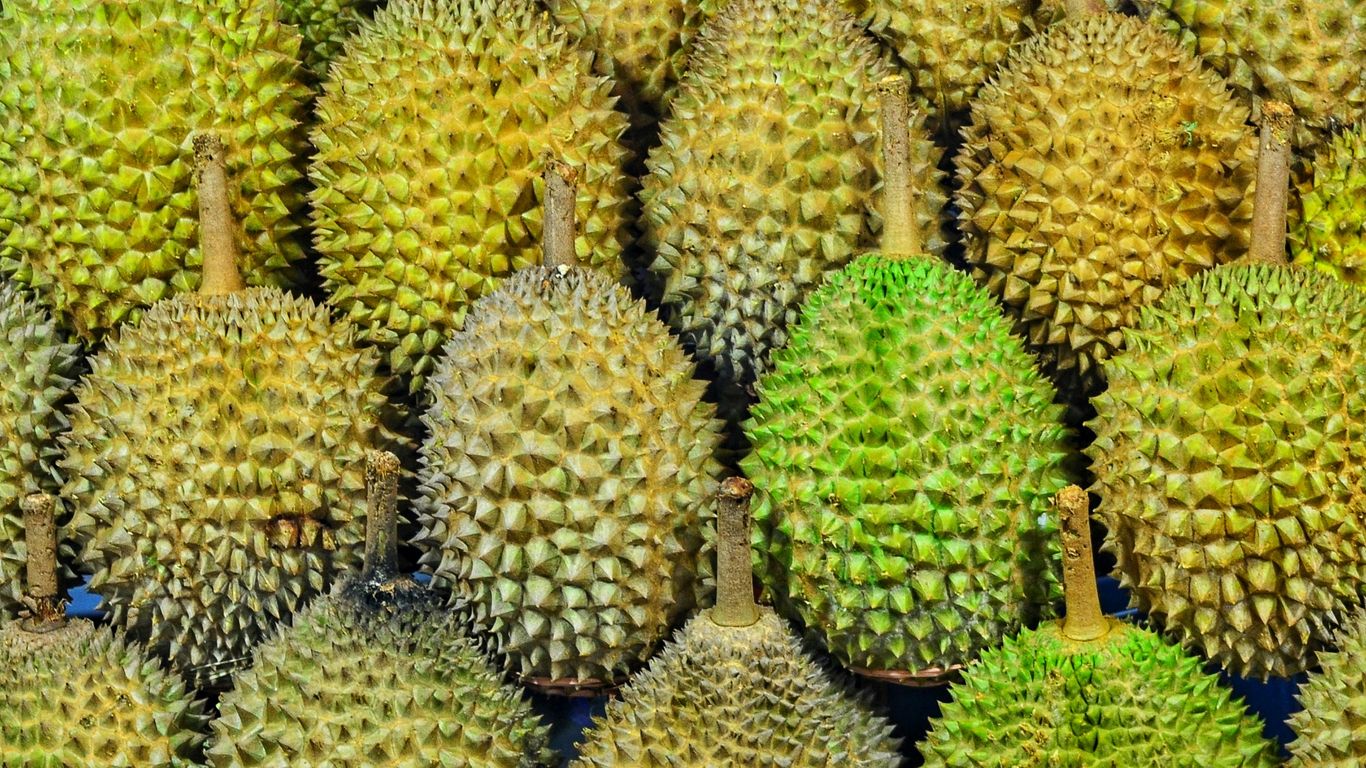
Mao Shan Wang, often called MSW or Musang King, is currently the most popular durian variety. It’s known for its rich, complex flavour that balances sweetness with a pleasant bitterness. This durian is highly sought after by enthusiasts for its distinctive taste profile. The flesh is typically a deep, buttery yellow and has a creamy, almost dry texture that separates easily from the seed. You’ll often find a star-shaped pattern on the bottom of the fruit, which is a good indicator of its identity. The spines are usually short and thick, giving the fruit a somewhat stout appearance.
Origins And Characteristics
Originally from Gua Musang in Kelantan, Malaysia, the Mao Shan Wang cultivar gained prominence when it was cultivated in Raub and Bentong, Pahang. Durians from these regions are generally considered the best. The fruit itself is usually oval-shaped and light green, though sometimes it can have an ash-brown hue. The spines are quite distinctive, short and dense. The flesh is a vibrant, almost fluorescent yellow, and its texture is a key characteristic – it should be creamy and dry, not watery. The flavour is a complex mix of sweet and bitter, which is what many people love about it. The seeds are often shrunken, especially in older trees.
Identifying A Quality Mao Shan Wang
When picking a good Mao Shan Wang, look for a few key signs. The flesh should be a deep yellow, creamy, and dry. A good indicator of quality is the flavour profile – it should have that signature bittersweet taste. The shape of the fruit is often oval. On the bottom of the durian, you might see a star-shaped pattern, which is a common tell-tale sign. Also, check for a ring of spines at the base of the stalk. The texture is important too; it should be smooth and not mushy. Remember, the best Mao Shan Wang often comes into season during specific times, with Pahang’s peak usually around August to September. Finding a trusted seller is also key, as they can help you select the best fruits. Some sellers even differentiate grades, with ‘Black Gold’ being a premium label for the best Mao Shan Wang, often identified by dark greyish seams under the flesh, indicating maturity and deep flavour. This premium grade can be more expensive, but it represents the cream of the crop. If you’re new to durian, understanding these characteristics can help you appreciate the nuances of this popular fruit. For those looking for a more budget-friendly option, smaller or oddly shaped fruits, sometimes labelled as ‘Mini Mao Shan Wang’, can offer a similar flavour experience at a lower price point, though the flesh-to-seed ratio might be smaller. It’s worth exploring different types, like the D13 durian, to compare flavour profiles.
A Sweet And Milky Delight: Red Prawn
The Appeal Of Red Prawn
The Red Prawn, also known locally as Ang Hei or Hong Xia, is a durian variety that really stands out. It’s often a favourite for those who prefer a sweeter profile in their durian experience. The taste is generally quite sweet, with a pleasant milky undertone that makes it incredibly smooth and easy to eat. It’s not as intensely pungent as some other varieties, which makes it a good starting point for people who are new to trying durian. The flesh itself has a distinctive orangey-red hue, which is quite striking and gives the fruit its name. It’s a really enjoyable durian, especially if you’re looking for something that’s more on the sweet side of the flavour spectrum.
Flesh To Seed Ratio
One of the things that makes the Red Prawn so popular is its flesh-to-seed ratio. You’ll often find that the fruits have a generous amount of flesh, which is quite thick and satisfying. What’s even better is that the seeds inside are typically quite small. This means you get more of that delicious, creamy durian flesh with every bite. It’s a pretty good deal when you think about it, especially compared to some other durians where you might get a lot of seed and not as much flesh. This characteristic makes it a really good value for money, and definitely a crowd-pleaser.
Local Nicknames
This particular durian goes by a few different names depending on who you ask and where you are. You’ll hear it called Red Prawn, of course, because of its colour. But it’s also commonly known as Ang Hei, which is a Hokkien term, or Hong Xia in Mandarin. Sometimes, you might even hear it referred to as Udang Merah, which is Malay for ‘red prawn’. It’s interesting how different communities have their own names for it, but they all point to the same delicious fruit. It just goes to show how well-loved this variety is across different cultures in the region. If you’re looking for this specific type, knowing these different names can be pretty handy when you’re at the market or talking to a durian seller. It’s a great choice for a sweet treat, and you can find out more about different durian types here.
The Red Prawn durian is a popular choice for those with a sweet tooth. Its flavor profile is intensely sweet with a mild undertone, making it a delightful treat.
The Predecessor: D24 Sultan
Before the reign of the Mao Shan Wang, the D24 Sultan was the durian that had everyone talking. It held the top spot in the Singapore durian ranking for quite some time, and for good reason. Even though it’s been surpassed in popularity, the D24 still offers a really satisfying durian experience for those who appreciate its unique qualities.
A Lingering Alcoholic Note
The D24 is known for a subtle, almost bittersweet flavour profile that some describe as having a faint alcoholic hint. This isn’t overpowering, but rather a gentle complexity that adds to its character. It’s a taste that lingers, making it quite memorable.
Characteristics Of D24
These durians are typically on the smaller side, usually weighing between 1 to 2 kilograms. The husk is a light green, and the spines are a bit hooked at the tips. A distinctive feature to look out for is a spine-free area at the base, roughly the size of a 20-cent coin – a little marker that often signals a D24. The flesh itself is a generous, thick yellow, with a smooth and creamy texture. You might notice a bit of fibre, which actually helps to develop more flavour as you chew. Its higher fat content contributes to that rich, luxurious mouthfeel that many durian lovers seek.
A Taste Of History
The name "Sultan" was actually added by a durian seller called Combat Durian many years ago, giving it a regal touch. It represents a significant era in the history of durian appreciation in Singapore, marking a time when specific cultivars started gaining widespread recognition. Trying a D24 is like taking a bite out of that history, a nod to the durians that paved the way for today’s favourites.
The D24 Sultan was once the undisputed king of durians in Singapore, a time before the current obsession with Mao Shan Wang. Its creamy texture and distinct flavour profile made it a favourite for years.
The Acidity Of Golden Phoenix
Jin Feng’s Strong Profile
Often called the ‘Queen’ to Mao Shan Wang’s ‘King’, the Golden Phoenix, or Jin Feng (D198), is a durian that really stands out. It’s not just about sweetness here; this variety brings a noticeable tang to the table. This acidity isn’t overpowering, but it gives the durian a refreshing quality that many people enjoy, especially those who find other durians a bit too rich. It’s a flavour profile that’s quite distinct and can be a pleasant surprise.
Generous Fruit Portion
Despite its smaller size compared to some other popular types, the Golden Phoenix packs a good amount of flesh. The seeds are typically small, which means you get more of that creamy, slightly tart flesh to enjoy. It’s a good example of how size doesn’t always dictate the eating experience. You’ll find the flesh is usually a pale yellow, with a texture that’s dry but not overly pastey, and it carries a subtle floral scent.
Palm-Sized Appeal
When you see a Golden Phoenix, you’ll notice it’s often around the size of your palm. The thorns are usually small and spindly, often bunching up towards a distinctive tip at the base. The colour can vary, sometimes appearing light green or even a greyish-brown if grown higher up. It’s a durian that’s quite approachable, especially for those new to the fruit, as its flavour isn’t overwhelmingly pungent or sweet. It’s a good way to get acquainted with the world of durian flavours.
The Golden Phoenix offers a unique balance, moving beyond simple sweetness to include a pleasant acidity that makes it a memorable choice for many durian enthusiasts.
Here’s a quick look at what makes it special:
- Distinctive Acidity: A refreshing tang that cuts through the richness.
- Good Flesh-to-Seed Ratio: Small seeds mean more creamy flesh.
- Approachable Flavour: Not too pungent, making it suitable for beginners.
- Floral Aroma: A subtle scent that adds to the overall experience.
If you’re looking for a durian that offers something a little different from the usual sweet varieties, the Golden Phoenix is definitely worth trying. It’s a great option during the Singapore’s durian season when you want to explore beyond the most common choices.
The Sophistication Of Black Gold
Sometimes, you’ll hear durian sellers talk about ‘Black Gold’ durian. This isn’t a separate type of durian, but rather a special grade of Mao Shan Wang. Think of it as the cream of the crop, usually coming from older trees. These trees are thought to produce a more intense and complex flavour.
Cream Of The Mao Shan Wang Crop
When you see ‘Black Gold’ advertised, it’s essentially a label given by the seller to what they consider the best Mao Shan Wang fruits. It’s a subjective grading system, meaning different sellers might have slightly different ideas about what makes a durian ‘Black Gold’. Generally, these are fruits that have been sorted out for their superior quality, often from mature trees that yield a richer taste.
Dark Greyish Seams
One of the visual cues that might indicate a ‘Black Gold’ grade durian is the presence of dark greyish seams on the flesh. These aren’t bruises, but rather signs that the durian is mature and has developed those deep, complex flavours, often with a pronounced bitterness. The flesh itself is typically dense and buttery, with small seeds, maximising the edible portion. It’s a flavour profile that appeals to those who appreciate a strong, lingering taste.
Subjective Grading
It’s important to remember that ‘Black Gold’ is a seller’s designation. While it often points to a high-quality fruit, the actual taste can still vary. Factors like the specific plantation, the age of the trees, and even the weather during the growing season can influence the final flavour. So, while the label suggests a premium experience, personal preference still plays a big role. The current durian season in Singapore is seeing good availability of popular varieties like Musang King, so it’s a good time to explore these premium grades in May 2026.
The appeal of ‘Black Gold’ lies in its promise of an intensified Mao Shan Wang experience. Look for those telltale dark greyish seams as a potential indicator of its superior quality and complex, often bittersweet, flavour profile.
Mini Mao Shan Wang: A Different Perspective
Smaller Fruits, Wider Variations
While the "King of Kings" Mao Shan Wang often grabs the spotlight, there’s a whole other world of smaller MSW fruits out there. These are often referred to as Mini Mao Shan Wang, and they’re not just smaller versions of the big guys. Some dealers specifically source these smaller, sometimes odd-shaped fruits, often weighing less than a kilogram. This is great news for durian enthusiasts who enjoy doing a bit of a taste test, comparing fruits from different trees or even different plantations. It really lets you appreciate the wider range of flavours that even the same cultivar can produce.
Appreciating Flavour Differences
These Mini MSW are usually a bit cheaper than their larger counterparts. This is partly because the flesh-to-husk ratio can be smaller, but it also means you get a more concentrated flavour experience in some cases. Think of it like a tasting flight at a winery; you get to sample a variety of nuances. The quality can really vary, so finding a good seller is key. You might discover a hidden gem that offers a complex, bitter-sweet profile that rivals the premium grades. It’s all about exploring the subtle differences that make each durian unique. For those keen on understanding the finer points of durian varieties, this guide can be quite helpful.
Cost-Effective Option
So, if you’re looking to explore the Mao Shan Wang flavour without breaking the bank, the Mini MSW is definitely worth considering. It’s a more accessible way to experience the beloved durian, and you might just find yourself appreciating the smaller, more characterful fruits. It’s a different perspective on a familiar favourite, offering a chance to discover more about the diverse world of durian. The Singapore durian season often brings a variety of these smaller, more affordable options alongside the premium grades.
The Unique Flavours Of XO D24
A Bittersweet Legacy
Before Mao Shan Wang became the undisputed king of durian in Singapore, the D24 Sultan held court. And the XO D24? Well, it was the sophisticated older sibling, the one that offered a more complex experience. It’s a variety that many long-time durian fans remember fondly, often cited as one of the best durian varieties in Singapore from a bygone era. It’s not just about sweetness; XO D24 brings a distinct character to the table.
The Hint Of Alcohol
What sets XO D24 apart is that subtle, lingering alcoholic note. It’s not overpowering, but it’s definitely there, adding a layer of complexity that’s quite addictive. This characteristic comes from a slightly more mature fermentation process, giving it a bittersweet profile that’s quite different from the straightforward sweetness of some other cultivars. It’s one of those popular durian cultivars Singapore that really makes you pause and savour the taste.
Affordable Indulgence
While it might not have the same hype as some newer varieties, XO D24 remains a favourite for its unique flavour and, often, its more accessible price point. It offers a taste of durian history without breaking the bank. If you’re looking to explore beyond the usual suspects and appreciate nuanced tasting notes durian Singapore, the XO D24 is definitely worth seeking out. It’s a reminder that sometimes, the classics really do endure for a reason.
Here’s a quick look at what makes XO D24 stand out:
- Alcoholic undertones: A signature bittersweet flavour with a hint of fermentation.
- Complex profile: Offers more than just sweetness, appealing to a discerning palate.
- Historical significance: A taste of durian’s past before the reign of Mao Shan Wang.
- Value for money: Often more affordable than premium varieties, providing a rich experience.
The Early Contender: D2 Dato Nina
Before the reign of the Mao Shan Wang, there were other durians that held sway. The D2 Dato Nina is one such variety, a cultivar that was registered way back in 1934. It enjoyed a good run of popularity in the eighties, but these days, it’s not as commonly found on the market. Part of the reason for its decline might be that it’s not the most fleshy durian, and some find it a bit tricky to open, even with its relatively thin husk.
A Historical Perspective
The D2 Dato Nina has a long history in the durian world. It was one of the earliest durians to be officially registered, showing its significance in the past. While it might not be a household name anymore, its historical presence makes it an interesting one to explore for those keen on the evolution of durian varieties. It’s a reminder that tastes and preferences change over time, and what was once popular can fade.
Distinctive Shape and Colour
When you see a D2 Dato Nina, you’ll notice its unique appearance. It’s often described as kidney-shaped or lopsided, with a husk that leans towards a brownish hue. The thorns are usually small, and the fruit itself typically weighs between 1.5 to 1.8 kilograms. The core of the durian is noticeably wide, and the flesh, while not abundant, has a distinctive bronze-yellow colour. It’s a durian that stands out visually.
A Raisin-Like Flavour
Despite not being the meatiest durian, the D2 Dato Nina offers a flavour profile that’s worth trying. Many describe its taste as having a subtle sweetness with a hint of something akin to raisins soaked in cognac. For those who appreciate a more nuanced flavour rather than an overwhelming sweetness, this durian might just hit the spot. It’s a taste that lingers, offering a different experience compared to the more common varieties available during the durian season.
The D2 Dato Nina’s flavour is often compared to a mellow botrytis semillon, a sophisticated note for a durian that’s often overlooked today.
The Mild Introduction: D78
Rugby Ball Shape
The D78 durian is a bit of a gentler introduction to the world of this spiky fruit. It’s usually a medium to large size, and you’ll notice it has a shape that’s pretty much like a rugby ball. The thorns on this one are also quite thick, giving it a sturdy appearance. It’s not the most common variety you’ll see everywhere, but it’s definitely worth trying if you’re new to durian.
Pale Yellow Flesh
When you get inside a D78, the flesh is a pale yellow. It’s not the vibrant, deep orange you might see in some other types, but it has its own charm. The texture is generally described as dry and creamy, which is a nice balance. It doesn’t have that super-intense sweetness or bitterness that can sometimes be a bit much for beginners. Think of it as a mellow flavour profile.
A Gentle Introduction
This is where the D78 really shines. It’s a great starting point for anyone who’s curious about durian but a bit hesitant about the stronger flavours. The taste is mild, not too sweet, and has just a hint of bitterness. It’s the kind of durian that lets you appreciate the texture and subtle notes without being overwhelmed. If you’ve been put off by durians in the past because they were too strong, the D78 might just change your mind. It’s a good way to ease into the more pungent varieties later on. You can often find this variety during the main durian harvest season in Singapore, typically from June to August.
The Boutique Choice: Kasap Merah
Dry, Pastey Texture
Kasap Merah, sometimes known as D179 or Durian Botak, is a bit of a niche player in the durian scene. It doesn’t have the widespread fame of a Mao Shan Wang, but it’s got a dedicated following. People who seek out Kasap Merah often do so for its distinctively dry and pastey flesh. It’s not your typical creamy durian; think more along the lines of a thick, sticky paste. This texture is quite different from the watery or overly sweet varieties, offering a unique mouthfeel.
Less Sweet Profile
Compared to many other popular durians, Kasap Merah leans towards a less sweet flavour. It often carries a subtle bitterness that some enthusiasts find quite sophisticated. This profile makes it a good choice if you’re looking for something that isn’t overwhelmingly sweet. It’s a flavour that grows on you, especially if you appreciate a more complex taste.
Dedicated Fanbase
While it might not be on every durian seller’s main display, Kasap Merah has its loyal fans. These are the folks who specifically ask for it, knowing exactly what they’re getting. You might need to do a bit of searching to find it, but if you’re curious about exploring beyond the usual suspects, it’s worth the effort. Some stalls, like Ah Seng Durian, are known to carry harder-to-find cultivars, so it’s worth checking with them if you’re wondering where to buy durian Singapore.
Kasap Merah offers a departure from the norm, appealing to those who prefer a drier, less sweet, and more complex durian experience. Its unique texture and flavour profile have cultivated a devoted following among discerning durian lovers.
Looking for a special spot? Kasap Merah is a top pick for those wanting something a bit different. It’s a place that really stands out from the crowd, offering a unique vibe that’s perfect for a memorable meal. Discover what makes Kasap Merah so special and book your table today!
So, Which Durian Reigns Supreme?
Well, after all that talk about the different kinds of durian, it’s pretty clear there’s a whole lot more to this fruit than meets the eye. From the ever-popular Mao Shan Wang, with its creamy, bitter-sweet kick, to the D24 that paved the way for all these fancy names, each type has its own thing going on. Whether you’re after something super bitter, intensely sweet, or with a hint of something else, there’s probably a durian out there for you. It really just comes down to what you like and maybe a bit of luck finding a good seller. Happy durian hunting, everyone!
Frequently Asked Questions
What is the most popular type of durian in Singapore?
Mao Shan Wang, also known as Musang King, is the most popular and highly sought-after durian in Singapore. People love it for its creamy texture and strong bittersweet taste.
How can I tell if a Mao Shan Wang durian is good quality?
A quality Mao Shan Wang usually has a star-shaped pattern at the bottom, a bald stem, and a light green husk with thick, short spikes. The flesh should be deep yellow, creamy, and easy to remove from the seed.
What makes Red Prawn durian special?
Red Prawn durian is known for its reddish flesh, very sweet and milky taste, and small seeds. Locals often call it Ang Hei or Hong Xia. It’s perfect for people who like sweeter durians.
Why is D24 Sultan called the ‘predecessor’?
D24 Sultan used to be the favourite durian before Mao Shan Wang became popular. It has thick, creamy flesh with a smooth, rich taste and a hint of alcohol, which many people still enjoy today.
What is unique about Golden Phoenix durian?
Golden Phoenix, or Jin Feng, is a smaller durian with a strong, sharp taste and a bit of acidity. Even though it’s small, it has a lot of flesh inside and is great for people who like a stronger flavour.
Is Black Gold durian different from regular Mao Shan Wang?
Yes, Black Gold is a special grade of Mao Shan Wang. It comes from older trees and is known for its dark veins under the flesh and deeper, more complex bitter flavours. It’s considered a premium choice.
Are Mini Mao Shan Wang durians worth trying?
Mini Mao Shan Wang durians are smaller and usually cheaper. They offer a wider range of flavours because they come from different trees. Some fans enjoy tasting the differences between them.
What is the best way to choose a good durian?
The best way is to buy from a trusted seller. Look for fruits that smell strong but not sour, have a firm husk, and match the typical shape and colour of the type you want. Building a good relationship with your durian seller can help you get the best picks every time.