Alright, let’s talk about Hokkien Mee in Singapore. It’s one of those dishes you just have to try when you’re here, you know? But with so many places claiming to have the best, where do you actually start? I’ve been on a bit of a mission, trying out different spots to find that perfect plate of noodles. It’s not always easy, some places are super popular and have long queues, but I reckon it’s worth the effort. So, if you’re looking for the best Hokkien Mee Singapore has to offer, stick around, I’ve got a few ideas for you.
Key Takeaways
- Swee Guan Hokkien Mee is a top contender for the best Hokkien Mee in Singapore, known for its wet style.
- Xiao Di Fried Prawn Noodle is another highly recommended spot, particularly in the Serangoon area.
- Ah Hock Fried Hokkien Noodles offers a dry version and is often found at Chomp Chomp Food Centre.
- Geylang Lor 29 Fried Hokkien Mee is consistently mentioned as a must-try for its wet Hokkien Mee.
- When searching for the best Hokkien Mee Singapore has, consider both wet and dry versions, and don’t be afraid to try places with queues.
1. Swee Guan Hokkien Mee
Swee Guan Hokkien Mee is a name that pops up quite a bit when you’re talking about the good stuff in Singapore. You’ll find it at Sing Lian Eating House on Lorong 29 Geylang, and it’s definitely a spot worth checking out if you’re on the hunt for a solid plate of this local favourite. They’re open from 5pm to 11pm daily, so it’s a good option for dinner.
What sets Swee Guan apart, according to a few folks, is its distinct texture. The noodles here are thicker than you might find elsewhere, which means they hold onto that flavourful stock really well. This gives the dish a bit of a sticky feel, and it’s something that people seem to either love or find a bit unusual. It’s not your everyday noodle texture, that’s for sure.
The flavour profile here is quite something. It’s got this sticky, starchy quality, and a subtle alkaline note that some might not usually go for. But then you get these layers of smokiness, from both the charcoal fire and the wok hei, plus a gentle sweetness. It’s a complex mix that really works.
When you order, expect to wait around 20 minutes, especially if it’s busy. The portion size has been mentioned as being a bit on the smaller side for the price, and the chilli, while present, doesn’t always add as much as you’d hope. Still, the noodles themselves are often praised for retaining a good bite, and the overall flavour complexity is what keeps people coming back. It’s a place where the skill of the cook really shines through, making up for any minor quibbles about ingredients. If you’re curious about how different stalls prepare this dish, you can find out more about the various styles of Hokkien Mee.
Here’s a quick rundown of what to expect:
- Noodle Texture: Thicker noodles that absorb stock well, leading to a sticky mouthfeel.
- Flavour Profile: A complex mix of smokiness (charcoal and wok hei), mild sweetness, and a subtle alkaline note.
- Waiting Time: Approximately 20 minutes.
- Price Point: Starts from $5, though some find portions small for the cost.
- Chilli: Included, but its impact on the overall dish can vary.
2. Xiao Di Fried Prawn Noodle
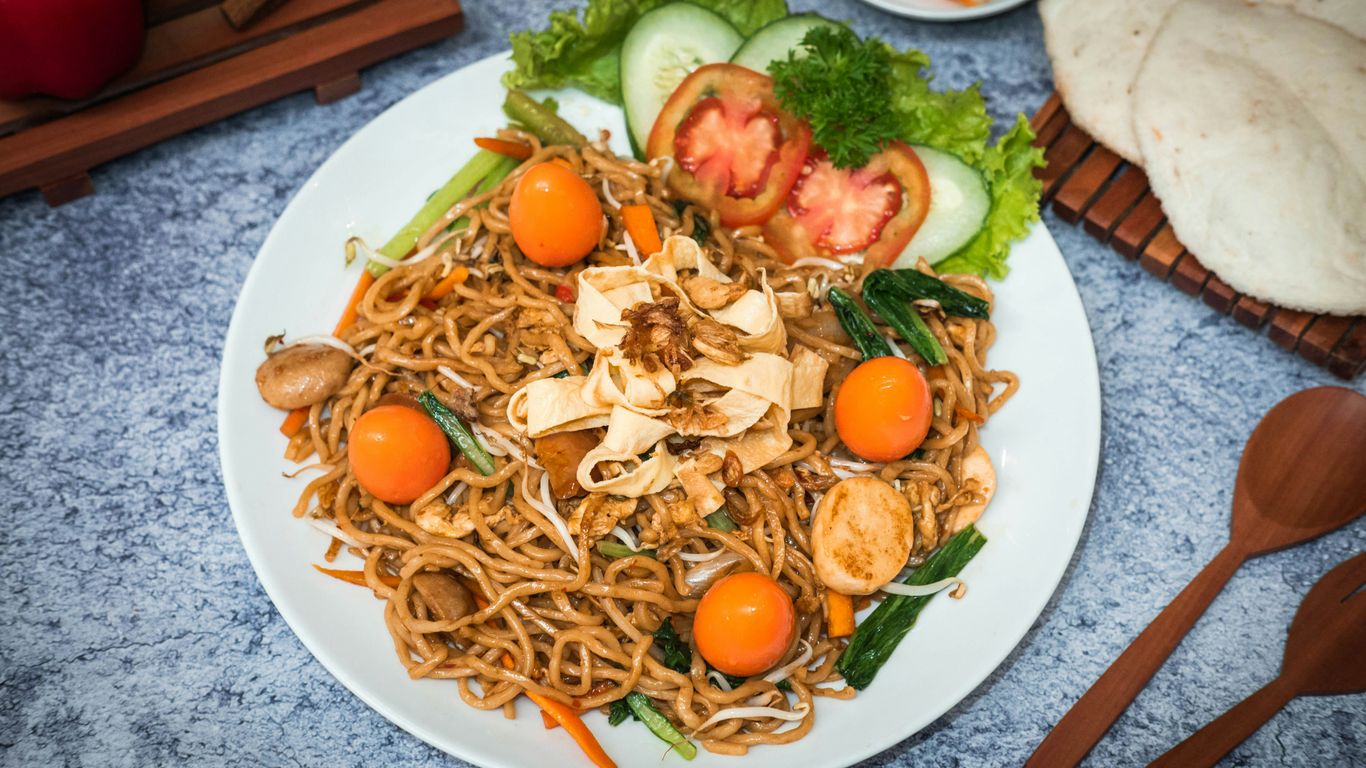
Xiao Di Fried Prawn Noodle is a spot that often gets mentioned when people talk about good Hokkien Mee in the Serangoon area. They do a version that’s pretty well-rounded, aiming for that authentic flavour. The egg is cooked into little bits of omelette, giving a slightly charred taste that reminds you of proper wok hei, which is a nice touch. They also serve the fried lard in small pieces, so it adds a bit of crunch without being too heavy on the noodles.
When you get your plate, you’ll notice a few things:
- The chilli is quite fiery, but it doesn’t completely drown out the natural sweetness from the prawn stock.
- There’s a pleasant garlicky aftertaste that lingers after you’ve had a mouthful.
- The portion size is on the smaller side, and the price point is a bit higher than some other places.
While the noodles themselves can sometimes be a bit soft, the overall flavour profile is usually quite satisfying. It’s a dish that aims for that classic taste, and for many, it hits the mark.
It’s worth noting that the prawns, while present, might not always be the freshest. Still, for a solid plate of Hokkien Mee with good wok hei notes, Xiao Di is a contender. They even offer delivery for their beloved fried prawn noodles, which is handy if you can’t make it down there in person.
3. Ah Hock Fried Hokkien Noodles
Ah Hock Fried Hokkien Noodles is a popular spot located in the bustling Chomp Chomp Food Centre. They’re known for serving up a Hokkien mee that leans towards the drier side, which means the noodles really soak up all that flavourful stock. It’s a different approach compared to some of the wetter versions you’ll find around Singapore, and many reckon it’s a masterclass in noodle preparation.
When you order, you can choose from a few different portion sizes, starting at S$3, then S$4, and S$5. The chilli here is also worth a mention; it’s got this lovely floral note that complements the noodles perfectly. It’s a dish that’s quite well-balanced overall.
The noodles at Ah Hock have a way of absorbing the rich stock, creating a concentrated flavour profile that’s quite satisfying. It’s a testament to how simple ingredients can be transformed into something truly special with the right technique.
While the portions might seem a bit on the smaller side for some, the quality and taste are what draw people in. It’s a good example of Singapore Hokkien Mee done right, focusing on deep flavour and texture. Just be prepared for a bit of a wait, especially during peak hours, though they do deliver the food to your table once it’s ready. Finding a seat can also be a bit of a challenge in the busy hawker centre.
4. Geylang Lor 29 Fried Hokkien Mee
Geylang Lor 29 Fried Hokkien Mee is a spot that really leans into the smoky side of things. When you get a plate here, you’ll notice that distinct char from the open wok cooking. It’s a flavour that definitely sets it apart.
The noodles themselves can be a bit soft, but the intense sweetness and the wok hei more than make up for it. The chilli, however, could use a bit more punch; it doesn’t quite add the zing you might hope for. Still, the overall experience is pretty memorable.
Here’s what to expect:
- Smoky aroma: A signature feature from the charcoal fire.
- Intense sweetness: Derived from the prawn stock.
- Wok hei: That elusive ‘breath of the wok’ flavour.
- Chilli: A bit mild, could be improved.
Getting there can be a bit of a mission, especially with the traffic in the Geylang area. Parking is also notoriously difficult, so plan your trip accordingly. It’s a bit out of the way, but many reckon the flavour is worth the trek.
They’re open from 11:30 am to 9:30 pm, but they do close on Mondays, so keep that in mind. A plate here will set you back about $6, and you might be waiting around 15 minutes, especially if it’s busy. It’s a popular place, and for good reason, but be prepared for the journey.
5. Yang Zhou Fried Hokkien Mee
Yang Zhou Fried Hokkien Mee is a spot that often gets mentioned when people talk about the classic Singaporean dish. It’s one of those places that seems to have a steady stream of customers, which is usually a good sign, right? They focus on the traditional way of preparing Hokkien Mee, aiming for that authentic flavour that many locals grew up with.
The noodles here are cooked to a nice texture, soaking up the rich prawn stock. You’ll find a decent amount of fresh prawns and other ingredients in the mix. The real star, though, is the wok hei – that smoky, slightly charred flavour you get from a super-hot wok. It’s what separates the good from the great when it comes to Hokkien Mee, and Yang Zhou seems to get it right.
Here’s a bit of what you can expect:
- Noodle Texture: Cooked just right, not too soft, not too firm.
- Prawn Stock: Deep and flavourful, the backbone of the dish.
- Wok Hei: A noticeable smoky char that adds depth.
- Ingredients: Fresh prawns and other standard additions.
It’s a solid choice if you’re looking for a no-fuss, tasty plate of Hokkien Mee. While it might not reinvent the wheel, it certainly delivers on the classic taste that makes this dish a hawker favourite. It’s a place that sticks to what it does best, focusing on perfecting that one dish, which is often a marker of a specialist eating place.
The balance of flavours is key here. It’s not overly sweet or salty, just a good, savoury noodle dish that hits the spot. The chilli served on the side is also worth trying; it complements the noodles without overpowering them.
Prices are pretty standard for Hokkien Mee in Singapore, making it an accessible option for a satisfying meal. You get a good portion for the price, and the quality of the ingredients, especially the succulent prawns, is evident.
6. Yong Huat Hokkien Mee
Yong Huat Hokkien Mee is a spot that often gets mentioned when people are talking about good Hokkien Mee in Singapore. It’s one of those places that seems to have a loyal following, and for good reason. The noodles here are usually cooked to a nice texture, not too mushy and not too firm, which is a good start for any Hokkien Mee dish.
What stands out for many is the flavour. They manage to get a good amount of that smoky ‘wok hei’ into the noodles, which is pretty important for this dish. The gravy is also quite flavourful, often described as rich and savoury. It’s the kind of dish that makes you want to slurp up every last bit.
Here’s a quick rundown of what you might expect:
- Noodle Texture: Generally well-cooked, offering a satisfying bite.
- Flavour Profile: Strong ‘wok hei’ and a rich, savoury gravy.
- Ingredients: Usually includes fresh prawns and decent portions of other ingredients.
- Chilli: Often praised for its spicy kick, which complements the noodles well.
The balance of flavours and textures at Yong Huat is what keeps people coming back. It’s a solid choice if you’re looking for a satisfying plate of Hokkien Mee that hits all the right notes. It’s not overly fancy, but it delivers on taste and that comforting hawker food experience. If you’re exploring the culinary scene in Singapore, Yong Huat is definitely worth considering for a taste of this local favourite.
7. Chia Keng Fried Hokkien Mee
Tucked away in the bustling Chomp Chomp Food Centre, Chia Keng Fried Hokkien Mee offers a distinct take on this beloved local dish. Unlike some drier versions, Chia Keng leans towards a wetter consistency, which allows the noodles to really soak up the flavourful prawn stock. This results in a dish that’s quite sweet, a characteristic that some diners adore.
What really sets Chia Keng apart, though, are the additions that complement the noodles. The crispy fried lard bits are a standout, adding a satisfying crunch and a burst of savoury goodness to every mouthful. And if you like a bit of heat, their chilli is noted for being particularly spicy, providing a fiery kick that balances the sweetness of the noodles.
Here’s a quick rundown of what to expect:
- Noodle Style: Generally wetter and starchier.
- Key Accompaniments: Super crispy lard, very spicy chilli.
- Flavour Profile: Noticeably sweet, with a spicy chilli counterpoint.
It’s worth noting that while the food is good, the waiting time can be a bit of a wait, often around 30 minutes. The stall does offer delivery to your table, which is a nice touch, but be prepared for potential crowds and limited parking around the popular East Coast Lagoon Food Village area, especially during peak hours.
While the sweetness might not be for everyone, the combination of the wet noodles, generous crispy lard, and potent chilli makes Chia Keng a memorable stop for Hokkien Mee enthusiasts looking for something a little different.
8. Hong Heng Fried Sotong Prawn Mee
Tucked away in the Tiong Bahru Food Centre, Hong Heng Fried Sotong Prawn Mee is a spot that really caught my attention, especially after it snagged a mention in the Michelin Guide. Honestly, before that, it wasn’t on my radar, but one bite and I could see why it earned that recognition. It’s a bit of an ‘ang moh’ style Hokkien mee, if you can imagine that – almost like a pasta dish.
The noodles here are cooked to a perfect al dente, giving them a satisfying chew. The prawns, sotong, and fishcake are prepped and then tossed into the wok right at the end, so they keep a nice firm texture. The fish cake adds a bit of variety, stopping the noodles from being too samey. What really stands out is the chilli; it’s got a spicy, savoury kick rather than being overly sweet, which makes the whole dish feel more like a savoury pasta than the sweeter versions some Singaporeans prefer. And yes, there’s definitely a good dose of wok hei.
Here’s a quick look at what you can expect:
- Noodle Texture: Al dente, with a good bounce.
- Seafood: Fresh prawns and sotong, retaining their firmness.
- Flavour Profile: Savoury chilli, prominent wok hei.
- Overall Impression: A well-executed plate that feels a bit different.
The stall itself is kept quite clean, which is a point Michelin often looks for. The cook was also pretty friendly during my visit.
It’s a solid plate of Hokkien mee that offers a slightly different take on the classic. If you’re in the Tiong Bahru area, it’s definitely worth checking out. You can find it at 30 Seng Poh Road, Tiong Bahru Market, #02-01. They’re usually open from 11 am to 8 pm, but take note, they’re closed on Mondays.
9. Eng Ho Fried Hokkien Prawn Mee
Eng Ho Fried Hokkien Prawn Mee is located at Teck Ghee Square Food Centre. It’s a spot that seems to keep its regulars happy, though it’s worth noting they do close on Tuesdays. I popped by on a Wednesday once, only to find it shut, so definitely check their Facebook page for updates before you head over.
When you do get to try it, you’ll find the noodles have that distinct alkaline taste, which some folks really enjoy. They tend to use a good amount of bee hoon mixed in, which helps soak up all that flavourful stock. The overall taste leans towards the sweeter side, which is a common preference for many Hokkien Mee enthusiasts in Singapore.
The balance of noodles, stock, and chilli is key to a good plate of Hokkien Mee. Some prefer it wetter, others drier, and the sweetness level can be a deal-breaker for some.
Here’s a quick rundown of what to expect:
- Noodle Texture: A mix of yellow noodles and bee hoon, often described as having a pleasant chew.
- Flavour Profile: Generally sweet, with a noticeable alkaline note from the noodles.
- Stock Absorption: The higher proportion of bee hoon helps in soaking up the rich stock.
The price point is quite reasonable, making it an accessible option for a satisfying meal. Just be prepared for a potential wait, as queues can form, especially during peak hours. It’s a good example of the diverse styles of Hokkien Mee you can find across the island, each with its own loyal following.
10. Tian Tian Lai Fried Hokkien Prawn Mee
Tian Tian Lai, which translates to ‘Come Daily’, is a spot that many locals know and love for their Hokkien Mee. It’s located in the Toa Payoh West Market and Food Court, and you’ll want to get there early because they often sell out. I tried going once around 1:30 PM and, yep, they were all gone. So, I made sure to head back the next morning, and it was worth the wait.
This place serves up a wetter style of Hokkien Mee, but don’t let that fool you into thinking it’ll be mushy. The noodles here manage to hold their texture really well, which is a big plus. The stock is quite something – it’s got this lovely sweetness, almost floral, that really makes the dish sing. Even the sambal, which I usually find too sweet to pair with a sweet Hokkien Mee, works surprisingly well here. It’s a combination that just clicks.
Here’s a quick rundown:
- Noodle Texture: Retains a good bite despite being a wetter style.
- Stock Flavour: Notably sweet with a subtle floral note.
- Sambal Pairing: Unusually complementary to the sweet noodles.
- Prawns & Squid: Fresh and add a good seafood element.
The overall experience at Tian Tian Lai is a testament to how well-balanced flavours can come together. It’s a dish that’s comforting and satisfying, proving that sometimes the simplest ingredients, when cooked with care, create something truly memorable.
They do offer delivery to your table, which is a nice touch, and there’s usually other good food available in the vicinity if you’re with a group with different cravings. It’s a solid choice if you’re in the area and looking for a flavourful plate of Hokkien Mee. The price starts at around $4, which is pretty standard for a good bowl these days.
Get ready for a taste sensation at Tian Tian Lai Fried Hokkien Prawn Mee! This spot serves up a truly delicious plate of noodles that’s a must-try for any food lover. Don’t miss out on this amazing dish; check out our website to find out more and plan your visit!
So, Where’s the Best Hokkien Mee?
After all that slurping and searching, it’s clear that Singapore’s Hokkien Mee scene is pretty amazing. We’ve tried a bunch, from the super wet and saucy ones to the drier, wok-charred versions. Each stall has its own little twist, whether it’s the freshness of the prawns, the crispiness of the lard, or that elusive wok hei flavour. It’s a dish that really brings people together, and honestly, finding your personal favourite is half the fun. So keep exploring, keep tasting, and enjoy the hunt for your perfect plate. Happy eating!
Frequently Asked Questions
What exactly is Hokkien Mee?
Hokkien Mee is a tasty noodle dish that started in China and became super popular in Singapore. It’s usually made with yellow noodles and white rice noodles, stir-fried with prawns, squid, and pork. Often, it’s cooked in a yummy prawn broth, giving it a rich flavour. Some people like it ‘wet’ with more gravy, while others prefer it ‘dry’ with less sauce.
What makes Hokkien Mee taste so good?
A few things make Hokkien Mee awesome! A really important part is ‘wok hei,’ which is like the smoky flavour you get from stir-frying in a super hot wok. Good Hokkien Mee also has noodles that have soaked up all the tasty prawn broth. Plus, fresh ingredients like juicy prawns and crispy bits of pork fat (lard) make a big difference.
Are there different ways to eat Hokkien Mee?
Yeah, there are! The two main styles are ‘wet’ and ‘dry’. The wet version has more soupy gravy, making the noodles really moist and flavourful. The dry version is stir-fried with less liquid, so the noodles have a bit more chew and a stronger wok hei flavour. Both are delicious, just different!
What should I add to my Hokkien Mee?
Most places will give you some chilli sauce and a lime wedge. The chilli is often a bit spicy and savoury, and it goes brilliantly with the noodles. A squeeze of lime adds a zesty kick that cuts through the richness. Some people also like a splash of vinegar.
How do I know if a Hokkien Mee stall is good?
Look for a bit of a queue – that’s usually a good sign! Also, check if the noodles look like they’ve soaked up the broth well and if the prawns and squid look fresh. A strong, smoky wok hei smell is another great indicator. Don’t be afraid to try new places or ask locals for their faves!
Is Hokkien Mee expensive?
Generally, Hokkien Mee is pretty affordable, especially when you get it from hawker centres or coffee shops. You can usually get a decent plate for a few Singapore dollars. Some fancier places or special versions might cost a bit more, but it’s usually great value for the flavour you get.